



MK PEP – The Story And Learning So Far
The MK Place Expansion Partnership (MK PEP) journey is still in its early stages, but already we’re seeing just how much potential there is when people, partners and communities come together around a shared purpose.
This is long‑term work focused on tackling deep‑rooted and stubborn inequalities in physical activity. The kind that no single organisation can shift on its own.
Through a whole‑system, place‑based approach, we’re exploring what helps and what gets in the way of people being active in their everyday lives. That means listening to residents, learning from local organisations, testing ideas together and understanding the wider conditions that shape people’s health and opportunities.
What follows on this page is an honest picture of what we’re learning so far: the insights emerging from the discovery phase, the patterns we’re noticing, and the stories that are helping shape the direction of the work. It’s only the beginning, but it’s already showing the power of collaboration when change starts in place, with the people who know it best.
This timeline highlights the key moments from when the MK PEP Board was formed, the initially application was submitted to Sport England through to the next submission due in June 2026.
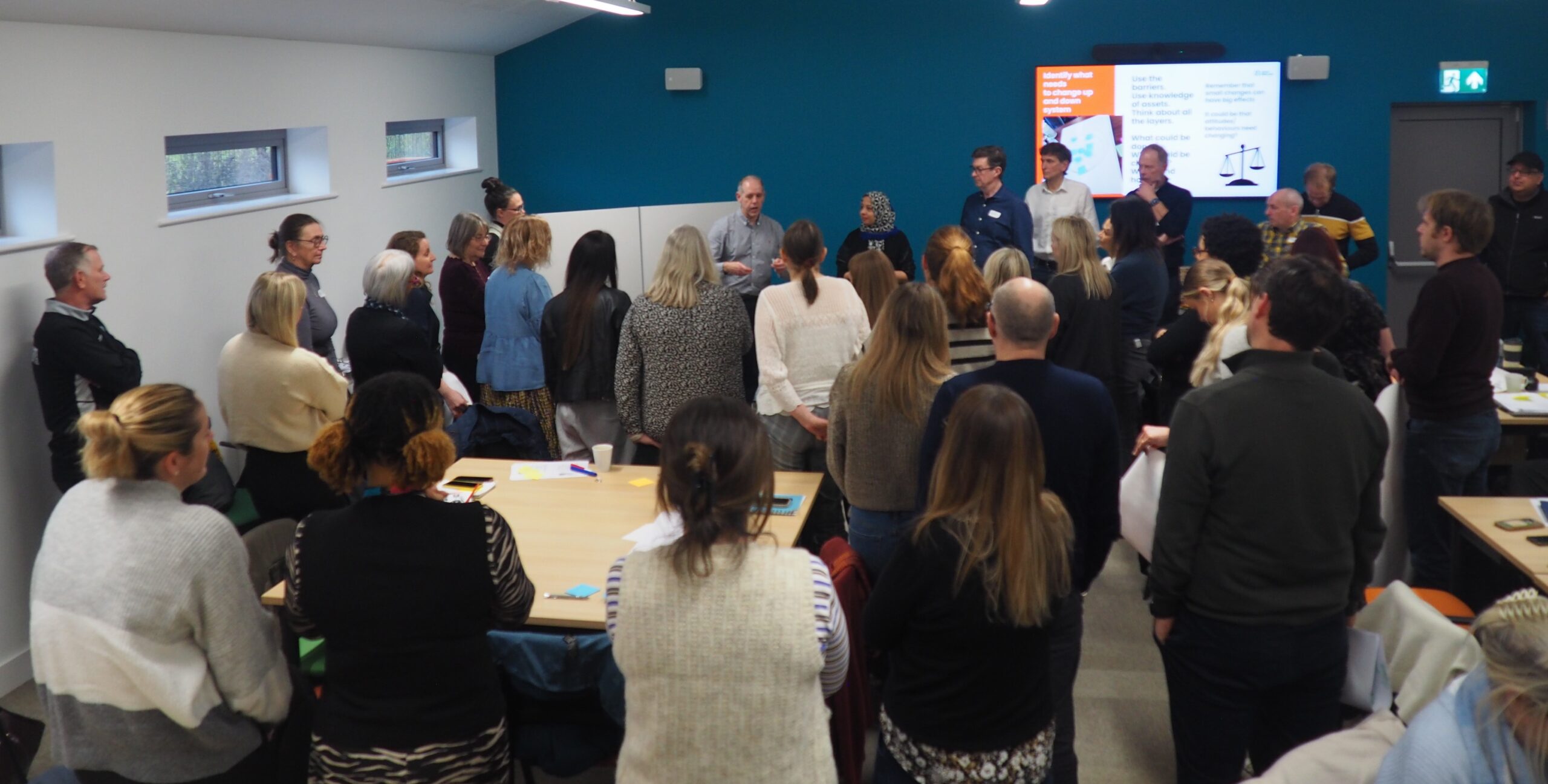
Over this period, partners across Milton Keynes have been listening, learning and building stronger connections. Early insights, co‑design work and test‑and‑learn projects are helping shape a shared understanding of the system and inform the next phase of investment planning.

Summary of Current Challenges in Milton Keynes’ System Landscape
Across partners working to improve health, physical activity and community wellbeing in Milton Keynes, several shared challenges are emerging. These issues reflect the complexity of the local system rather than the actions of any single organisation.
1. Fragmented Connections and Communication
Many partners highlighted the difficulty of maintaining consistent relationships across organisations due to staff changes, differing structures, and siloed ways of working. This can make it hard to know who the right contact is, understand current priorities, or keep information flowing effectively.
2. Cultural and Organisational Differences
Different organisational cultures, priorities, and expectations can sometimes make collaboration feel challenging. There is a shared desire to work more openly, but partners noted that politeness, caution, and a “what’s in it for me?” mindset can occasionally limit honest conversations or collective problem‑solving.
3. Barriers to Embedding Physical Activity
Physical activity is not always prominent within wider health and community conversations. Some professionals feel under‑equipped to discuss activity confidently, and many residents face practical or perceived barriers such as safety concerns, travel limitations, or limited use of local parks and community assets.
4. System Complexity, Siloed Funding and Decision-Making
Separate funding streams, differing targets, and parallel planning processes can unintentionally reinforce siloed working. Decision‑making can feel dispersed, with partners sometimes unsure where accountability sits. This occasionally results in duplicated meetings, multiple agendas, or missed opportunities to align efforts.
5. Underused Community Assets and Facilities
Schools, faith spaces, community venues, parks and open spaces have significant potential but are not always fully accessible or activated. Costs, management structures, or limited relationships with facility providers can restrict access for community groups and residents.
6. Equity, Representation and Trust
Partners expressed a shared ambition to strengthen inclusion and better reflect the diversity of MK. There is recognition that representation, trust, and confidence in statutory and community institutions varies across communities. Building deeper relationships with seldom-heard groups and community leaders is seen as essential.
7. Strategic Consistency and Shared Understanding
Across the system, differing interpretations of success, varied leadership approaches, and past experiences with short-term or parachuted programmes have created some uncertainty. There is appetite to build a more consistent, long-term approach that values lived experience and champions collaborative risk‑taking.
Current Activity Underway to Strengthen the System in Milton Keynes
Partners across Milton Keynes are investing time and energy into understanding the system more deeply and building the foundations needed for long‑term, collaborative change. Much of the Discovery Phase has intentionally focused on listening, learning and creating the conditions for more connected working.
1. Deep Listening and Resident Voice
A major strand of activity has centred on understanding lived experience. The Open University has led a Resident Voice research project, gathering insights from people across the area to build a richer picture of community strengths, barriers and aspirations. This work is helping partners ground future decisions in the realities of daily life and understand how system issues are felt by residents.
2. Supporting Local Leadership
Investment has gone into developing a stronger network of community and organisational leaders. A new Local Leaders training programme has launched, with a two‑day event taking place in January. This programme aims to support people already active in their communities, strengthen relationships between leaders, and grow the confidence and skills needed to influence change locally.
3. Co‑Design With Trusted Local Organisations
To avoid top‑down approaches and ensure solutions reflect community priorities, partners have run a series of co‑design workshops with locally trusted organisations. These sessions have created space for shared problem‑solving, relationship‑building and clearer understanding of what it takes for different groups to work well together.
4. Understanding Policies, Networks and System Maturity
Several pieces of analysis are helping partners see the system more clearly. A policy audit is reviewing the extent to which physical activity is embedded across local strategies and plans. A social network analysis is mapping who is working with whom, identifying strengths, gaps and potential connections across the system. A maturity assessment is helping partners understand where the system is in its development, and what capabilities need strengthening to progress.
Together, these insights provide a shared evidence base for future investment and collaboration.
5. Test and Learn Projects
To bring partners together around tangible opportunities, four test and learn projects have been launched; active travel, children & young people, low intensity sessions for adults and linking GPs and physical activity.
Each has a shared purpose and is designed to explore what works in practice:These projects are helping partners build trust, test new approaches, and learn quickly from real‑world practice.